
 Uh-oh, trouble in cosmologyland: Type Ia supernovae, the objects responsible for the post-1998 consensus that the universe is not just expanding, but accelerating, aren't such standard candles after all:
Now, astronomers led by Andrew Howell of the University of Toronto in Canada have found a type Ia supernova that is 2.2 times as bright as others of its class. Called SNLS-03D3bb, it lies about 3 billion light years away, a distance that was independently verified by studying the light spectrum of its host galaxy.As a student, I found it amazing that you could use brightness to measure distance. One always suspects that it's harder than it looks, but it's quite impressive that they have sufficient precision to detect outliers. Unfortunately, once everyone trying to image the dynamics of a younger universe gets on board, they're probably going to have a fun time agreeing on just who the "rogues" really are.
That brightness, along with other clues from the supernova's spectrum, suggests the white dwarf exploded with 2.1 solar masses of material – significantly above the Chandrasekhar mass. "It wasn't a little bit over – it was way over," Howell told New Scientist. "We're forced to say it's not a measurement error."
These young galaxies are found more often in the early universe, which corresponds to greater distances from Earth. "This might actually improve our precision in future studies if we identify this little subset of supernovae," says Howell.In my kind of physics, we sometimes call such things "pentaquarks". Ouch.
(Thanks to slashdot, apologies to Brian de Palma for post title...)





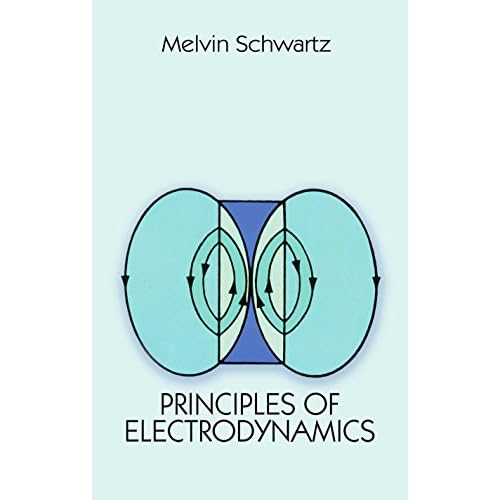 Terrible day, the world losing both Naguib Mahfouz and Melvin Schwartz. Schwartz was many things, a professor at Columbia, Nobel-prize winner in 1988 for the discovery of the muon neutrino, and a major figure in the history of Brookhaven. He was both a scientist there (i.e. the neutrino work) as well as an administrator (overseeing the RHIC project in its early stages!).
  When did Wired magazine become


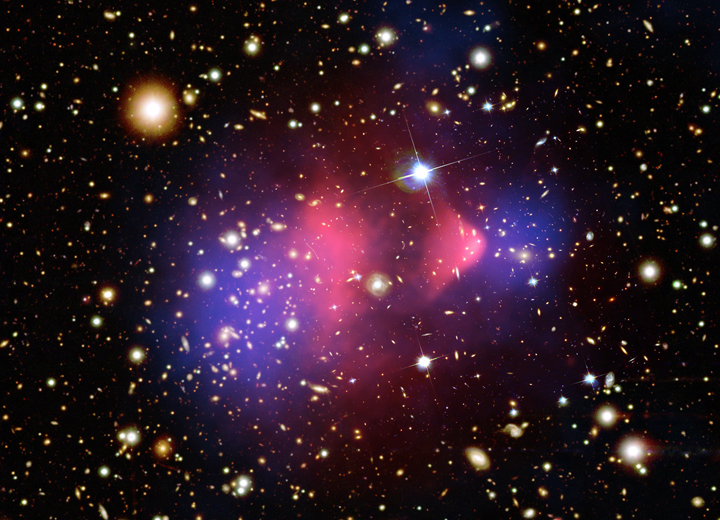 Go freaking figure, just a day after ranting on about RHIC physics to a whole group of friends who trekked out to BNL from NYC, those damn astronomers have got to get some cheap media attention by doing something easy:
 It's spring, and I use almost any excuse to post songs I like (which I only seem to do when I have too much time on my hands, as was the case this weekend with my girlfriend out of town). This one seems to have arisen out of a recent Talking Heads re-obsession, mixed with working to Fela Kuti albums (on iTunes, cheap) as background music. Have a

 Damn, 3quarksdaily






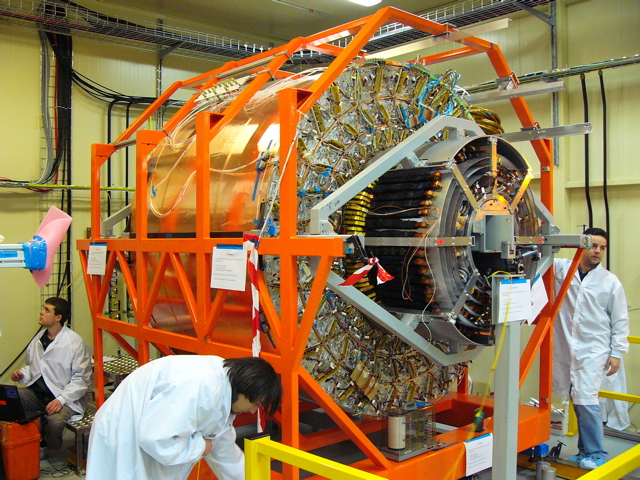










 That was fast: Director Chaudhari just announced that James Simons, along with partners, has committed to raising $13M for the RHIC run. This is great. I know that I and all of my colleagues are really excited about this. More later.



 Fun season so far, but pretty busy overall. That said, an amusing issue popped up at lunch, yesterday. Chatting with a friend of mine, a plant biologist at BNL, we both realized that we both were Lego-obsessed kids. Then it turns out that he was part of a group of three friends growing up in England on the same street, who were all obsessed with those multicolored plastic blocks, and they all became scientists. Adding me to the sample, that's 4 for 4: anyone else out there?
 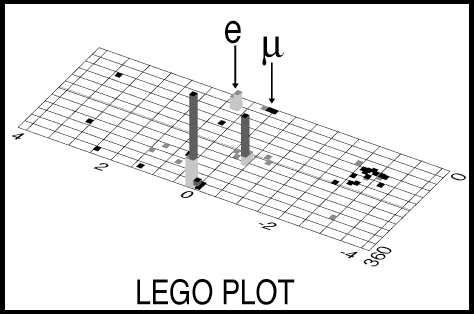 It's always amused me that high-energy physicist have been using "Lego plots" for years, but it never occurred to me that it could be part of a larger trend.

 OK, this has made me mad. John Horgan, author of the much-debated (and unread-by-me) "The End of Science", has managed to secure himself the last page of this week's New York Times Book Review on which to tell us that "

